
Baccarat Table Layout Explained: Different Layouts and Table Sizes
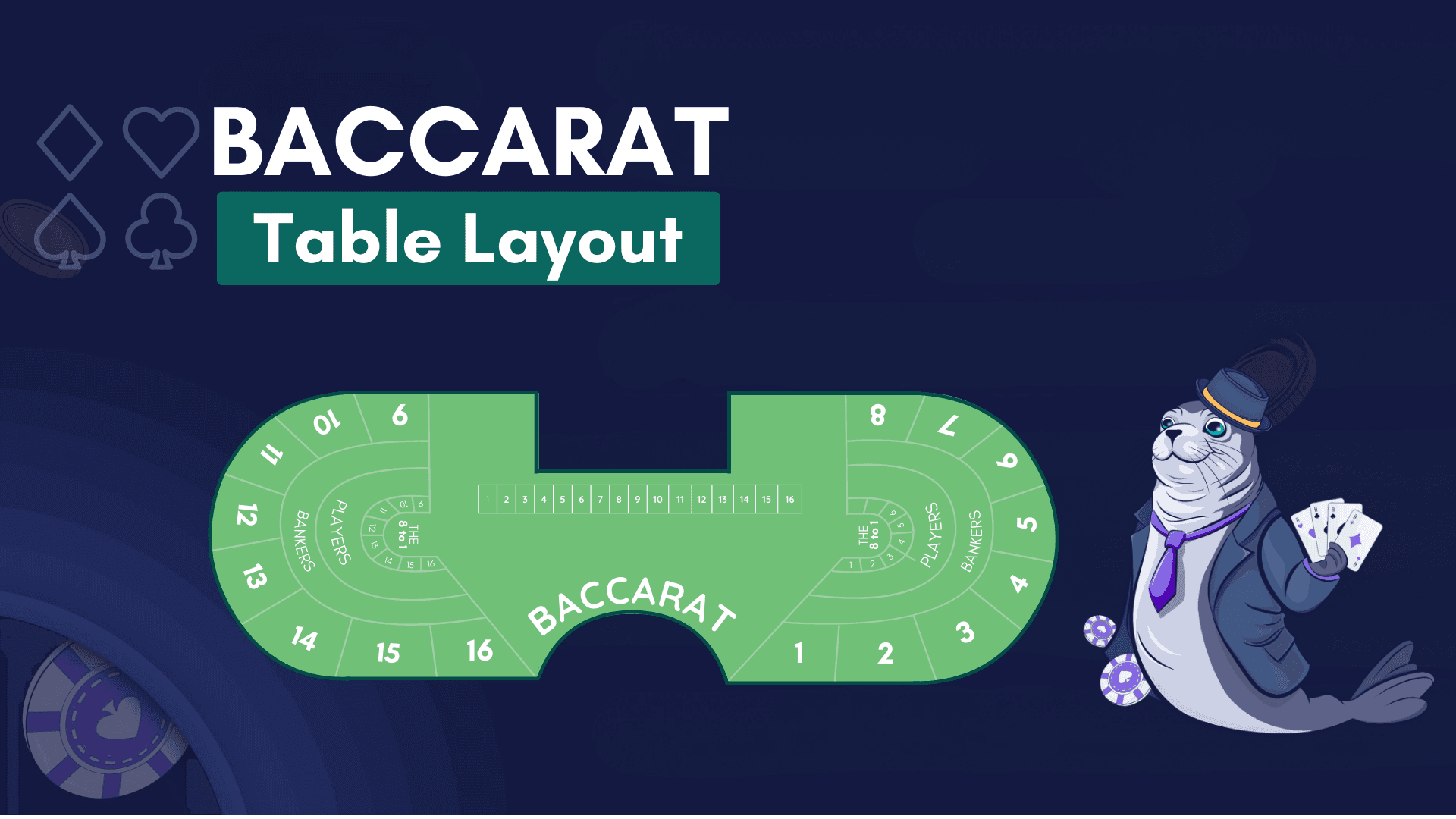
If you’ve ever tried baccarat in different casinos (or switched from live casino to online), you’ve probably noticed the tables can look very different. Some tables are huge and formal. Others are compact like blackjack. Online layouts are even simpler.
So why does baccarat have different table layouts and sizes?
Because casinos built different table formats for different “types” of play: speed, comfort, table limits, staffing, and whether players handle cards.
The important part for you as a player:
✅ The main game rules are the same across layouts (Player / Banker / Tie, same drawing rules).
✅ What changes is the experience: pace, limits, etiquette, seating, and sometimes how commission is handled.
Let’s break down each layout in the most practical way.
Big Baccarat (Full Baccarat Table)
When players talk about “classic” baccarat, they are almost always referring to Big Baccarat. For a long time, this was the only baccarat table you would find in a casino. The game was designed for high-stakes players, played slowly, and surrounded by a very formal atmosphere.
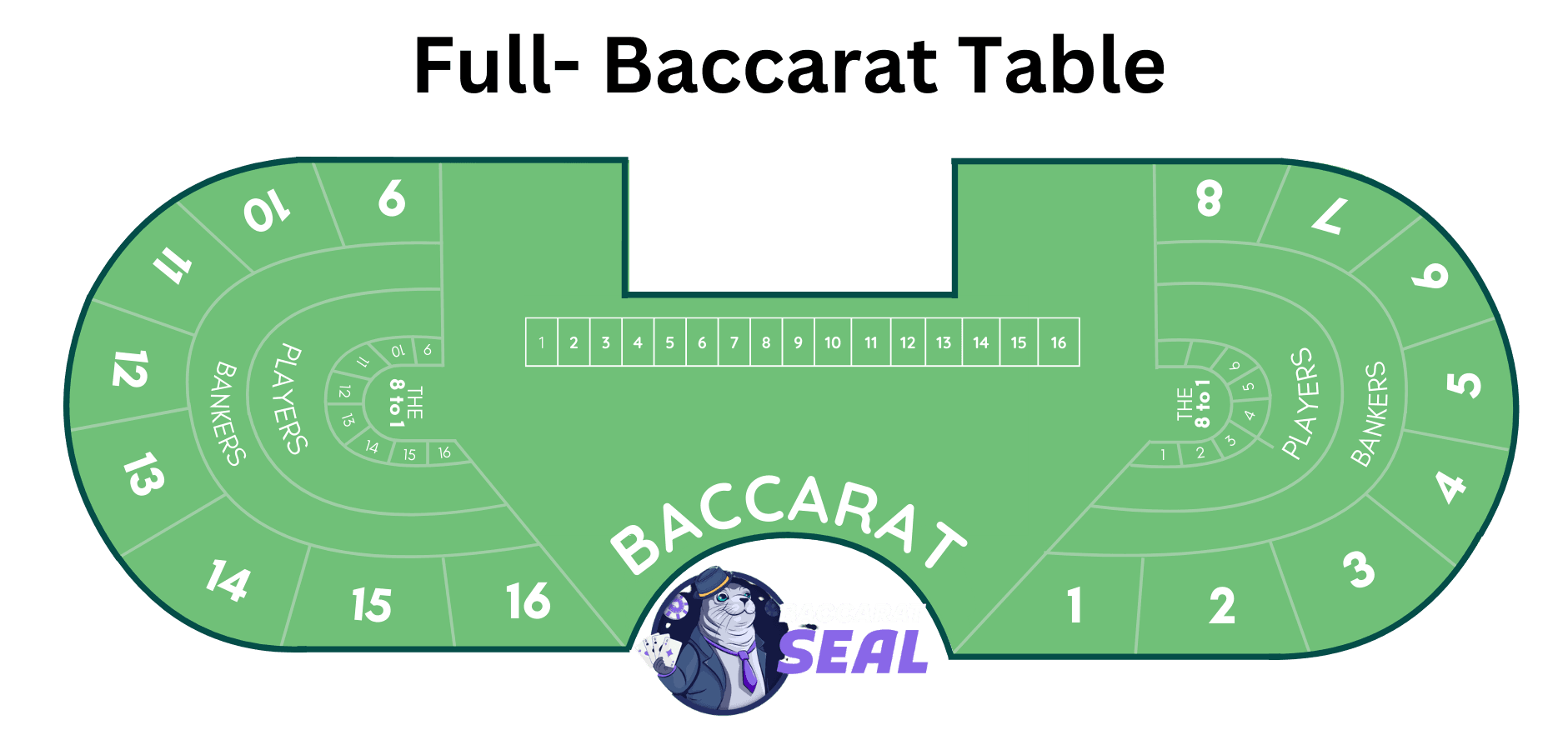
A Big Baccarat table typically seats up to 14 players, usually seven on each side. The table itself is large—closer in size to a craps table than a blackjack table—and is almost always placed in a High Limit room or a semi-secluded baccarat pit. This immediately sets the tone: Big Baccarat is not meant to be casual.
From an operational point of view, this table is heavily controlled. You will usually see three dealers working the game, with an additional dealer rotating on breaks, and at least one floorman overseeing play. On busy or very high-stakes games, there may be two floormen, each responsible for monitoring one side of the table. This level of supervision exists because large sums of money are often in action on a single hand.
Historically, Big Baccarat has been associated with high minimum bets, typically starting at $100 and rising to $10,000 or even $20,000 per bet. It is not unusual for several players to bet on the same side, resulting in six-figure stakes riding on the outcome of a single decision. This is one of the defining characteristics of the Big Baccarat experience.
Another key feature of Big Baccarat is card handling. Unlike Mini Baccarat, players may be invited to take cards from the shoe and slowly reveal them—a process known as squeezing. Many players enjoy this ritual, as it adds tension and drama to the game. However, it also introduces pressure. Some players prefer not to handle the cards at all, as making a mistake with third-card rules at a high-limit table can feel uncomfortable, even if the dealer is there to prevent errors.
From a casino’s perspective, Big Baccarat is expensive to run. It requires more staff, plays fewer hands per hour, and takes up roughly 250 square feet of floor space. As a result, many casinos offer fewer Big Baccarat tables today.
For players, Big Baccarat is about experience rather than efficiency. It suits those who enjoy a formal setting, slower gameplay, and higher limits, and who are comfortable with the etiquette and attention that come with a high-limit table.
Please Note
Although Big Baccarat looks very different from Mini or Midi Baccarat, the rules and odds are exactly the same. The larger table does not improve your chances—it simply changes the pace, etiquette, and overall feel of the game.
Mini-Baccarat
Mini-Baccarat appeared when casinos needed a way to make baccarat faster, more accessible, and cheaper to run—without changing the game itself. Its rise is closely associated with the expansion of casino gaming in Atlantic City, starting in the late 1970s. Operators already knew baccarat (often called Punto Banco) was popular with East Coast players, but the traditional Big Baccarat format was simply too slow, too expensive, and too space-hungry for a busy, mass-market casino floor.
Mini-Baccarat solved all of those problems at once.
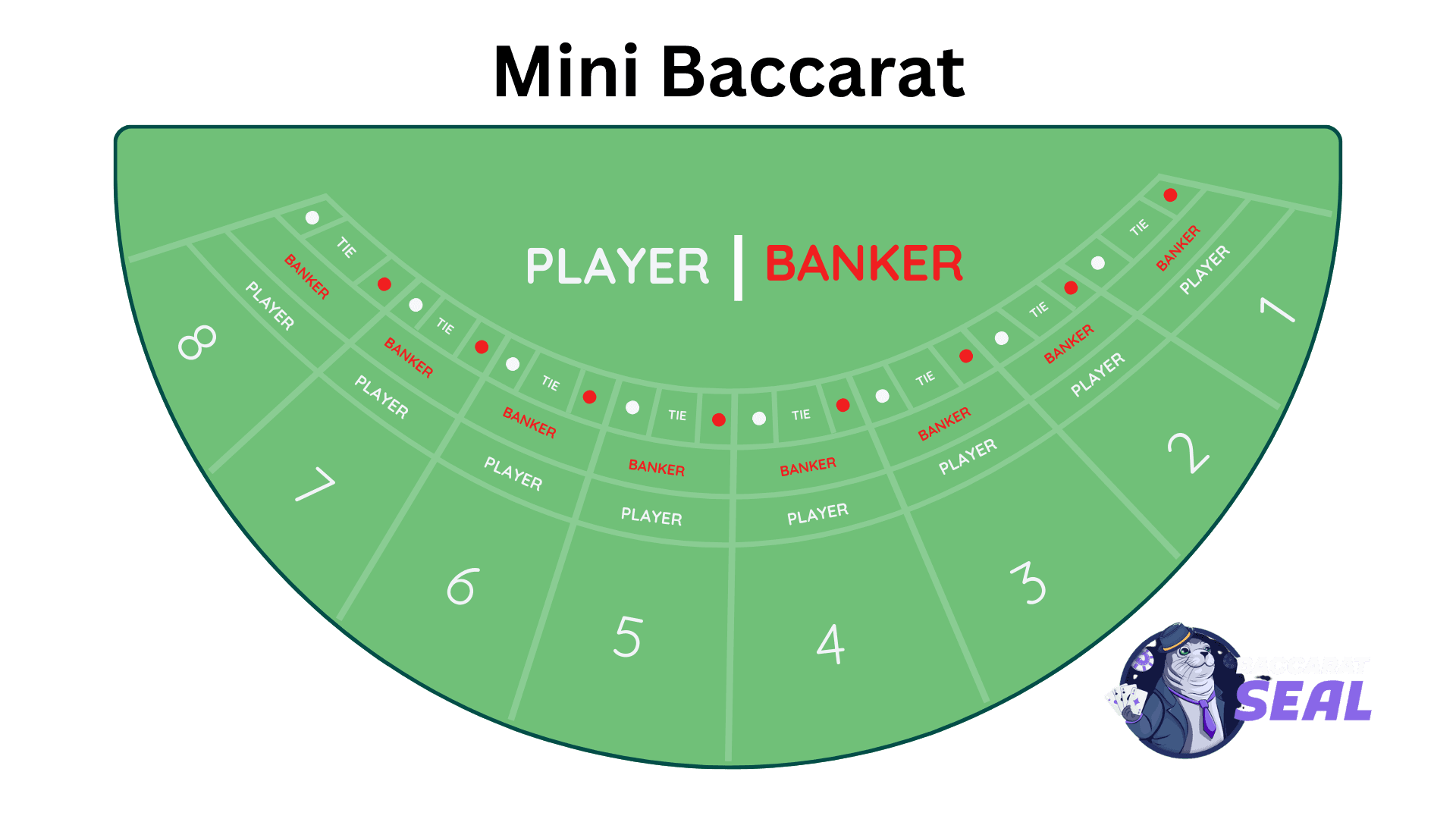
The game is played on a compact table roughly the size of a blackjack table. Instead of a multi-dealer crew, there is one dealer running the entire game. Players never touch the cards. The dealer deals both the Player and Banker hands, draws all third cards according to the rules, and settles the bets. From an operational standpoint, this immediately makes the game faster, more secure, and far easier to supervise.
From a player’s point of view, the most important thing to understand is this: Mini-Baccarat is the same baccarat game.
The betting options, payouts, and house edge are identical to Big Baccarat. Only the presentation has changed.
A typical Mini-Baccarat table seats six or seven players. The layout clearly marks betting areas for Player, Banker, and Tie, along with numbered player positions. Behind the betting areas, you’ll often see small boxes used to track the 5% commission on Banker wins, which is collected either at the end of the shoe or when you leave the table.
Because Mini-Baccarat is designed for the main casino floor, the limits are usually much lower. Minimum bets commonly match nearby blackjack tables—often $5 or $10, with maximums in the $500 to $1,000 range. This makes the game approachable for casual players and beginners, while still offering the same mathematical structure as high-limit baccarat.
Another key difference is pace. Without card squeezing or player-controlled shoes, Mini-Baccarat deals significantly more hands per hour. For many players, this makes the game feel smoother and less intimidating.
Pro Tip
If you’re learning baccarat, Mini-Baccarat is the easiest place to start. The dealer handles everything, so you can focus entirely on understanding the flow of the game and the betting options without worrying about etiquette or card-handling mistakes.
Midi-Baccarat
Midi-Baccarat is designed as a middle ground between Big Baccarat and Mini-Baccarat. It offers more comfort and player involvement than Mini-Baccarat, without the pressure, size, or high limits of a full Big Baccarat table.
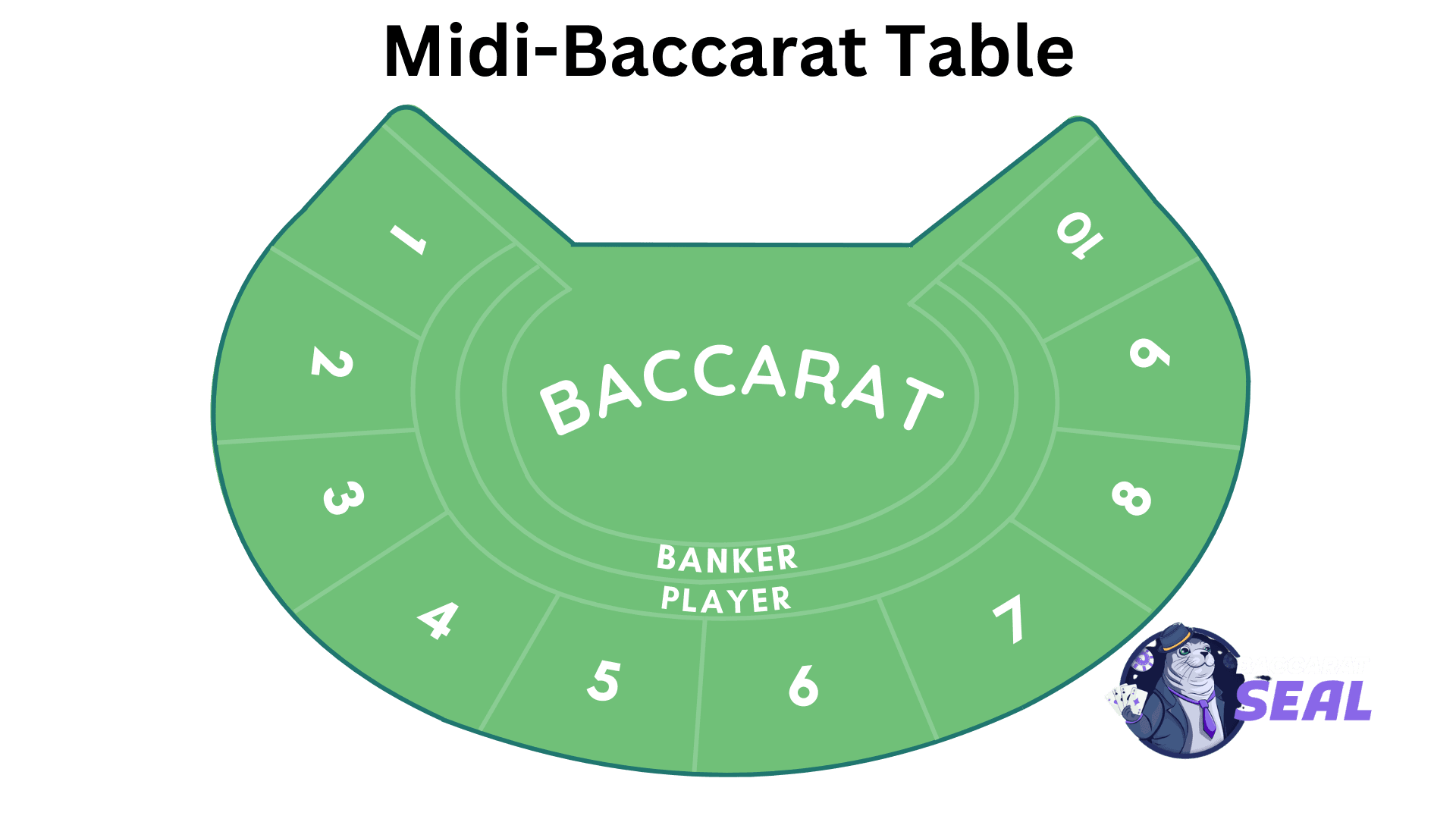
The table is mid-sized and usually seats nine players. It is lower and more comfortable than a Mini-Baccarat table, which makes a noticeable difference during longer sessions. The game is typically run by one dealer, keeping things simple and efficient.
A key feature of Midi-Baccarat is that players may handle and squeeze the cards, but the dealer always controls the shoe. This is important. It means players can enjoy squeezing cards without risking accidentally drawing a third card when the rules don’t allow it. For many players, this removes a lot of stress.
Because the game is slower and more comfortable than Mini-Baccarat, the betting limits are usually higher. Common limits range from $10–$15 to $1,000, with some tables offering $25–$50 minimums and $2,000–$3,000 maximums.
Baccarat Banque
Baccarat Banque (also known as Baccarat à Deux Tableaux) is a traditional baccarat variant mainly found in European casinos and some online casinos. Despite the name, the game is not played on two tables. It is played on one large table, divided into two sections—one on the banker’s left and one on the banker’s right.
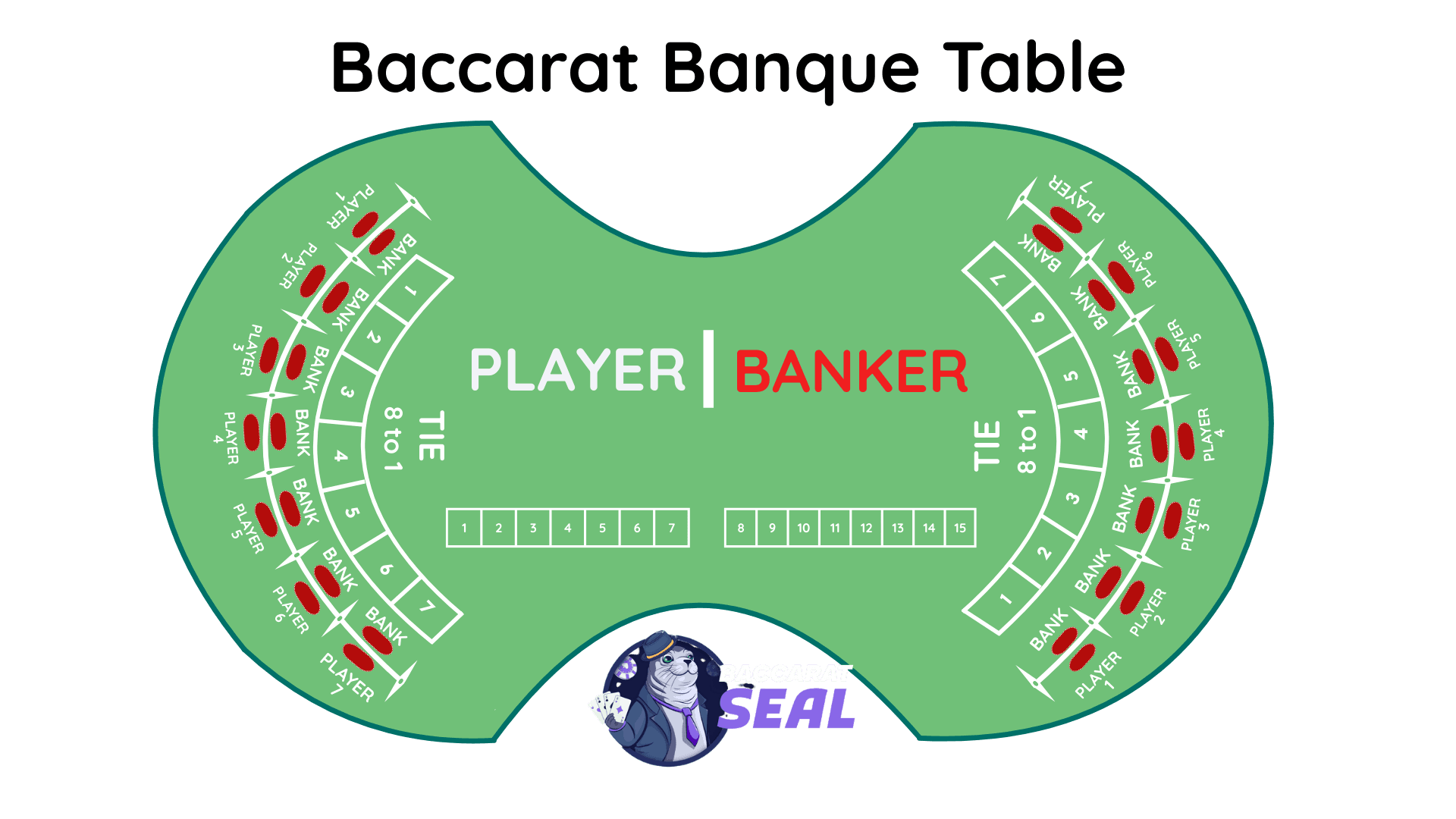
The game is usually played on a Big Baccarat–style table and uses three decks of cards. The most important difference from standard baccarat is that Baccarat Banque is player-banked. Players are playing against each other, not against the casino.
At the start of play, an auction determines who will be the banker. In practice, this is usually the player willing to put up the largest stake or the player who started the game. The banker keeps this role for the entire shoe, unless they choose to give it up or run out of money. Only the banker is allowed to bet on the Banker hand.
After the shuffle, the banker deals three two-card hands: one to the left side of the table, one to the right side, and one to themselves.
The two side hands act as Player hands, and both play at the same time against the single Banker hand.
Unlike standard baccarat, players can make drawing decisions. Player hands always stand on 6, 7, 8, or 9, always draw on 0–4, and may choose whether to draw on a total of 5. The banker has complete freedom to draw or stand against any total and usually bases that decision on the side with the largest bet, not the weakest hand.
Please Note
Baccarat Banque is slower and more complex than regular baccarat. It is best suited for experienced players who want more control and are comfortable with player-versus-player gameplay.
Dragon 7 / EZ Baccarat Table
Dragon 7, also known as EZ Baccarat, is a no-commission version of baccarat that was created to make the game faster and easier to play. From a player’s point of view, the biggest difference is simple: there is no 5% commission on Banker wins.
The table layout looks almost the same as a standard Mini-Baccarat table. You still have betting areas for Player, Banker, and Tie, but there is one extra betting spot clearly marked on the layout: Dragon 7.
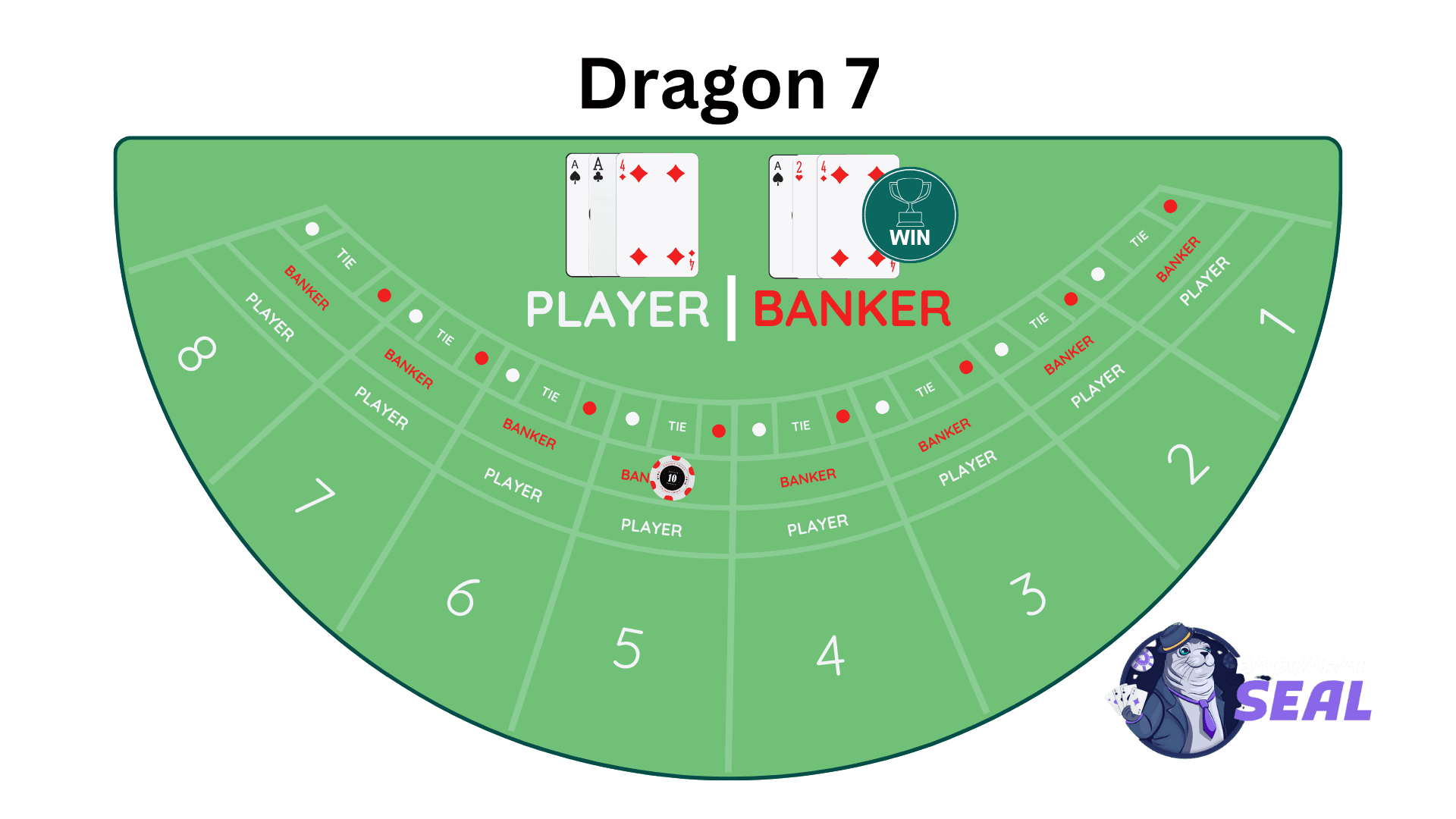
Instead of charging commission, EZ Baccarat changes one outcome in the game. If the Banker hand wins with three cards totaling 7, the result is a push, not a win. All other Banker wins are paid at 1:1 with no commission. This removes the need to track or collect commission and noticeably speeds up the game.
The Dragon 7 side bet is what adds excitement. If the Banker wins with exactly three cards totaling 7, this bet typically pays 40 to 1. In an 8-deck shoe, this happens around twice per shoe, which creates a strong “jackpot” feeling. When no Dragon 7 has appeared late in the shoe, table excitement usually builds.
Please Note
EZ Baccarat is faster and simpler, but it does not improve the odds of the main game. The Dragon 7 is a high-risk side bet meant for entertainment, not strategy.
Online Baccarat Table
An online baccarat table is designed to present the same baccarat game in a clean, simplified, and screen-friendly layout. While the visuals look different from a physical casino table, the underlying game rules are exactly the same.
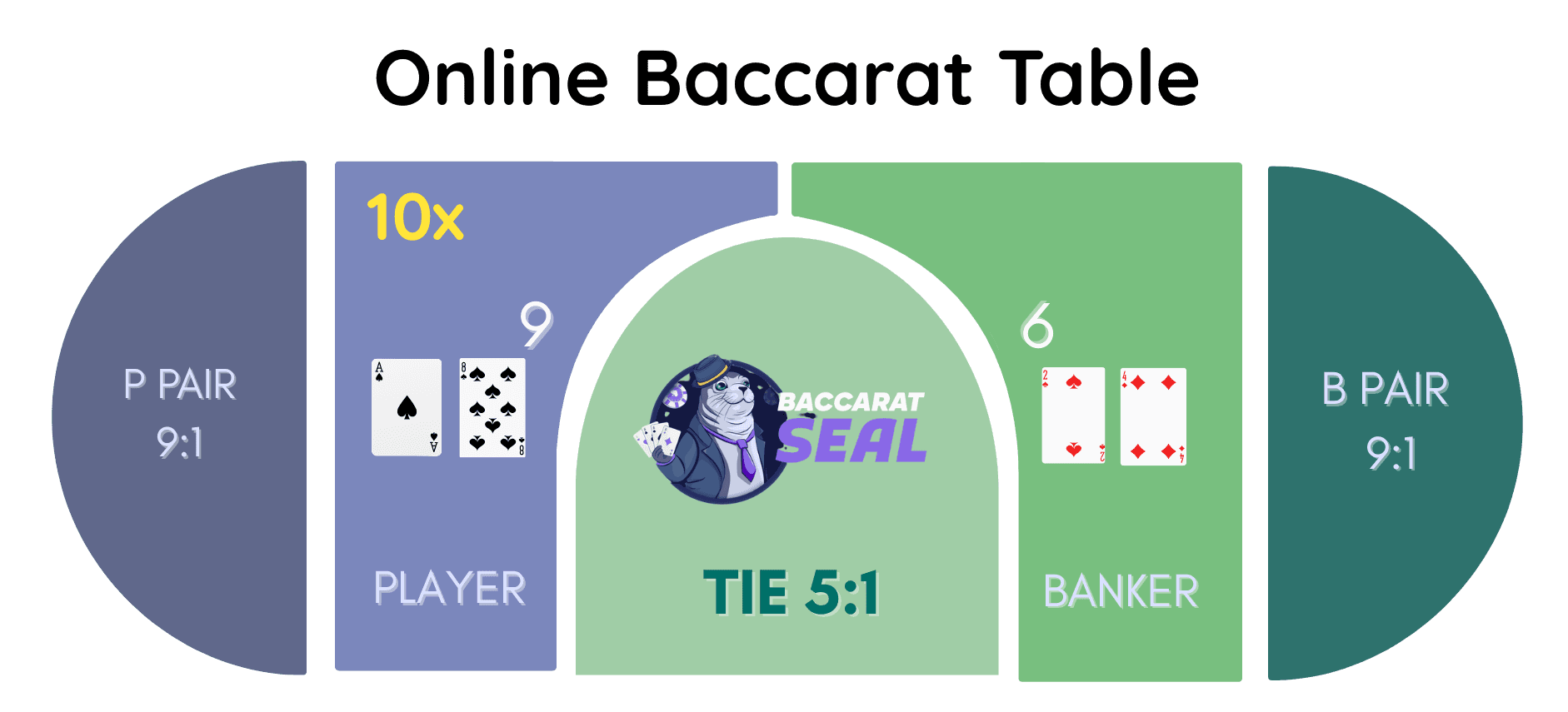
Most online baccarat tables are based on a Mini Baccarat layout. The betting areas for Player, Banker, and Tie are clearly separated and easy to click or tap. Many online tables also include optional side bets, such as Player Pair, Banker Pair, or other variations, which are usually placed around the main betting areas.
In live dealer baccarat, the layout you see on screen mirrors the real table in the studio. The dealer controls the shoe and the cards at all times, and players never handle the cards. This keeps the game fast and avoids any confusion about third-card rules. In RNG (software-based) baccarat, the layout is even more streamlined, focusing purely on betting and results.
Online baccarat tables often display extra information that you won’t see on a physical table, such as past results, roadmaps, statistics, and betting history. These tools are optional and do not change the odds, but many players find them useful for tracking game flow.
Please Note
Although online baccarat tables may look different and include additional side bets or statistics, the core game is still standard baccarat. The layout is optimized for clarity and speed—not for changing rules or improving odds.
Expert Advice: Choosing the Right Baccarat Table Layout
No matter which table layout you choose, the game itself does not change. What does change is comfort, pace, limits, and overall experience.
- Mini Baccarat is the best option for beginners and casual players. Limits are lower, the dealer controls everything, and the game moves quickly. This is also the standard layout for online and live-dealer baccarat.
- Midi Baccarat is ideal if you want more comfort and enjoy squeezing cards, but without the pressure of a high-limit table. Limits are higher than Mini, and the table feels more relaxed.
- Big Baccarat is designed for experienced players who enjoy a formal atmosphere, higher limits, and traditional card squeezing. These tables are usually found in High Limit rooms.
If you’re new to baccarat, start small. You can always move up once you’re comfortable. No matter the layout, baccarat rules and odds stay the same. The right table is simply the one that matches your budget, comfort level, and playing style.


